Teslas and other EVs aren't just regular cars with a different engine — they come with massive panoramic glass roofs, sensor-packed bodies, and a battery whose range is affected by how hard the climate system has to work. That combination makes window film choice more important on an EV than on almost any gas car. The wrong tint can interfere with sensors or do little for heat; the right one keeps the cabin cool, protects the interior, and helps preserve range. This guide explains exactly why Ceramic IR is the best window tint for Teslas and EVs in Yonkers and Westchester.
Why EVs Need Different Tint Than Gas Cars
An EV spends battery energy to cool its cabin, so every degree of heat that film keeps out is energy that stays available for range. EVs also tend to carry more glass and more electronics — cameras, radar, and antennas — than comparable gas cars. That raises two priorities above everything else: maximum infrared heat rejection, and a film that is completely non-metallic so it never interferes with the car's signals. Ceramic IR film is built for exactly this, which is why it's the default recommendation for any Tesla, Rivian, Polestar, or other EV.
The Panoramic Glass Roof Problem
The huge fixed glass roof on a Tesla Model 3, Model Y, and many other EVs looks incredible — and turns the cabin into a greenhouse on a sunny day. Factory roof coatings help with UV but do far less for infrared heat, which is what you actually feel. A Ceramic IR film applied to the roof glass dramatically cuts the radiant heat coming down on passengers, without making the car look blacked-out. It's one of the highest-impact upgrades an EV owner can make for summer comfort in the New York area.
Why Ceramic IR — Not Metallic or Dyed Film
Older metallic tints reject heat by using a thin metal layer — and that metal can interfere with cell signal, GPS, keyless entry, tire-pressure sensors, and the radar/cameras EVs rely on for driver-assist features. Cheap dyed film, on the other hand, fades to purple and barely touches infrared heat. Ceramic IR uses nano-ceramic particles that are non-conductive and non-metallic: up to 60%+ solar heat rejection and up to 99% UV blocking with zero signal interference. For a sensor-dense EV, non-metallic isn't a nice-to-have — it's mandatory.
Protecting Range, Interior, and Electronics
Less heat in the cabin means the climate system works less, and on an EV that translates directly into preserved driving range on hot days. Beyond range, Ceramic IR blocks the UV and infrared that crack dashboards, fade premium upholstery, and cook the touchscreens and electronics EVs are full of. For a vehicle where the interior is a big part of the experience and the resale value, protecting it with quality film is one of the smartest long-term moves you can make.
Legal Shades & Booking in New York
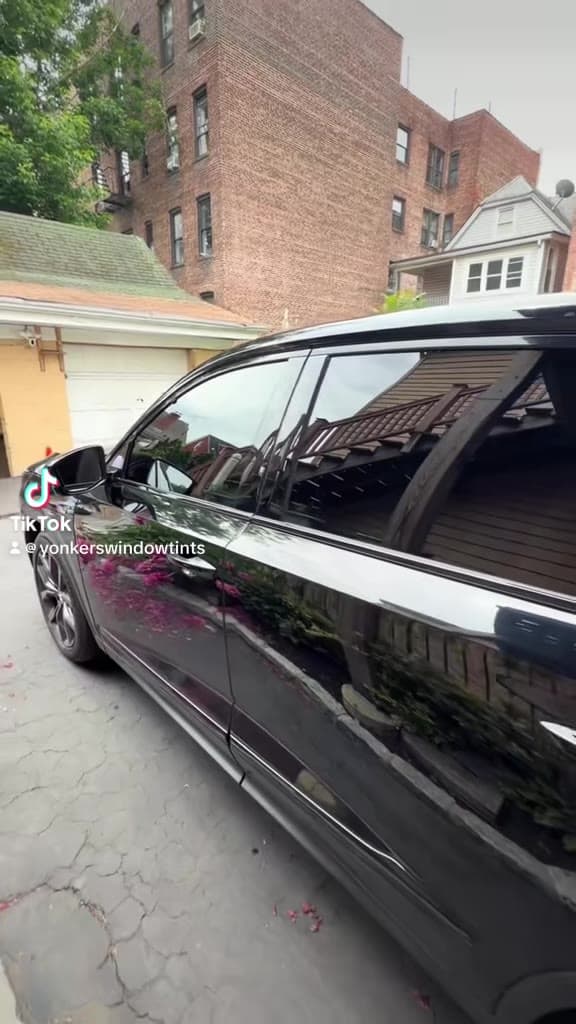
In New York, front side windows must allow at least 70% VLT, while rear windows and the roof can go darker. Ceramic IR is available across that full legal range, so you can stay compliant up front and still get strong heat rejection everywhere. We'll help you choose a legal, great-looking shade for your specific EV. Service is appointment-only with a deposit to lock your slot — call 914-217-2897 or book online to get your Tesla or EV scheduled in Yonkers.
Does window tint interfere with Tesla sensors or cameras?+
Not when it's non-metallic Ceramic IR film. Ceramic tint contains no conductive metal, so it won't interfere with cameras, radar, GPS, keyless entry, or cell signal. Avoid older metallic tints on any EV.
Will window tint help my EV's range?+
Indirectly, yes. By rejecting infrared heat, Ceramic IR reduces how hard the climate system has to work on hot days, which helps preserve driving range and keeps the cabin comfortable with less energy.
Can you tint a Tesla's panoramic glass roof?+
Yes. Applying Ceramic IR film to the panoramic roof greatly cuts the radiant heat that comes through the glass, without blacking out the look. It's one of the most popular upgrades for Model 3 and Model Y owners.
What's the best tint percentage for a Tesla in New York?+
New York requires at least 70% VLT on front side windows. Many EV owners pair a legal 70% Ceramic IR up front with a darker shade on the rear and roof. We'll help you pick a legal, good-looking combination.